
Iran leader end of 2026?
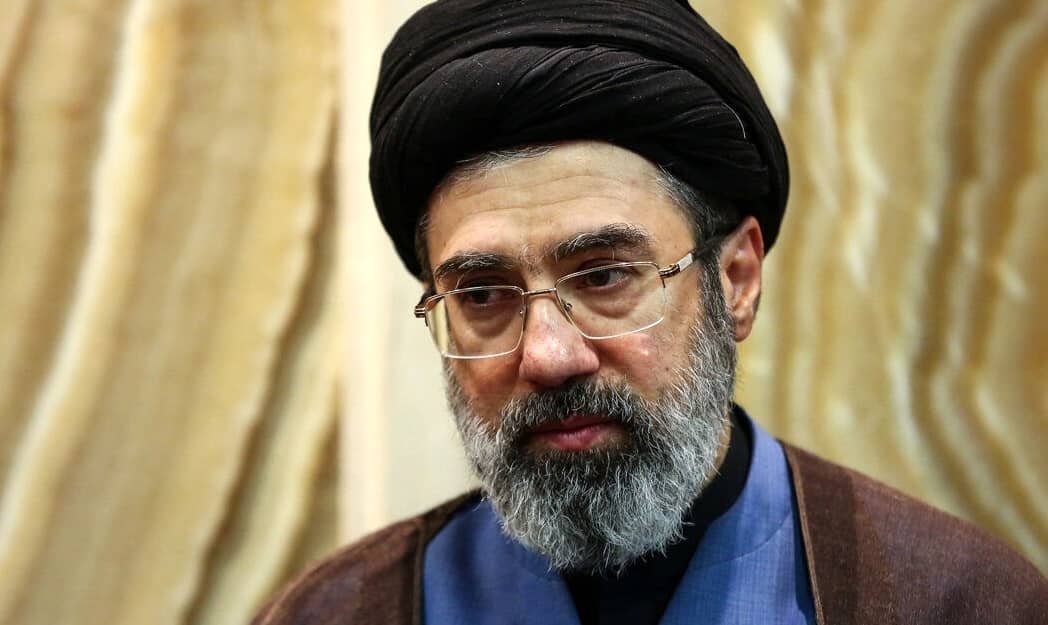
Mojtaba Khamenei
Order Book
Mojtaba Khamenei
Resolution Criteria
This market will resolve to the individual who de facto holds and exercises the powers of the head of state of the Islamic Republic of Iran on December 31, 2026 at 12:00 PM ET. For the purposes of this market, “de facto holds” refers to the individual who exercises primary governing authority over the Iranian state at that time, including effective control over the armed forces, national institutions, and core executive decision-making, regardless of formal title, constitutional designation, or international recognition. Formal appointment, recognition by the United Nations, or recognition by foreign governments is not required. If more than one individual claims to be head of state, this market will resolve to the individual who demonstrably exercises primary governing control within Iran’s territory at the specified time. Indicators of de facto authority may include control over the armed forces and security services; control over executive ministries and state administrative institutions; enforcement of national laws; issuance of binding national directives; and effective control over the capital and core state infrastructure. Symbolic status, foreign recognition without domestic control, nomination without effective authority, or expired prior service will not qualify. If no individual exercises effective governing control at the specified time, this market will resolve to “No Head of State”. The primary resolution source will be a consensus of credible reporting assessing who exercises effective governing authority at the specified time.
Mojtaba Khamenei is the heaviest-backed outcome to hold de facto power as Iran's head of state on 31 December 2026, with trading volume heavily concentrated on his name. The market spans 123 possible outcomes, but volume clusters sharply around a small number of contenders. Resolution depends on credible reporting assessing who exercises effective governing authority within Iran at 12:00 PM ET on 31 December 2026.
Market structure
123 named outcomes plus a 'No Head of State' contingency. Volume is heavily concentrated on a single outcome — Mojtaba Khamenei — with a secondary cluster distributed thinly across figures including Reza Pahlavi and the incumbent president Masoud Pezeshkian. The 'No Head of State' option carries a small but non-trivial share of volume. Resolution is determined by a consensus of credible reporting assessing de facto governing authority, not formal title or international recognition.
Background
Iran's political structure places supreme authority with the Supreme Leader, a position held by Ali Khamenei since 1989. The question of succession has become a persistent subject of analysis given Khamenei's age and reported health concerns. Mojtaba Khamenei, his son, has been discussed extensively in coverage of potential succession scenarios, though no formal succession process has been announced. The Islamic Republic's governance framework does not include a transparent or constitutionally codified succession mechanism comparable to those in parliamentary systems, making leadership transition an area of genuine structural uncertainty. Iran also faces sustained pressure from internal opposition movements and external geopolitical tensions, factors that lend additional weight to the 'No Head of State' and opposition-figure outcomes.
Key factors
The primary structural factor is the health and continued tenure of Ali Khamenei: any incapacitation or death before 31 December 2026 would trigger a succession process managed by the Assembly of Experts, whose composition and internal dynamics would shape who assumes effective authority. Whether that process produces a recognised successor quickly or results in a contested interregnum affects both named-individual outcomes and the 'No Head of State' resolution. A second factor is the stability of the Islamic Republic itself: significant civil unrest, military fracture, or external intervention could disrupt the normal operation of state institutions and elevate opposition figures such as Reza Pahlavi or Maryam Rajavi from negligible to relevant. The resolution criteria's emphasis on de facto control rather than formal title means that a transitional or disputed period could produce an outcome that diverges from constitutional expectation. The market's long tail of 123 outcomes reflects genuine uncertainty about which individual, if any, might emerge from an unexpected transition.
FAQ
How is the 'Iran leader end of 2026' market resolved?
The market resolves to whichever individual demonstrably exercises de facto governing authority over Iran at 12:00 PM ET on 31 December 2026, based on a consensus of credible reporting. Indicators include control over armed forces, executive ministries, and core state infrastructure. Formal title and international recognition are not required.
When does the Iran leader 2026 market resolve?
Resolution is assessed at 12:00 PM ET on 31 December 2026. The market resolves to whoever holds effective governing control at that specific moment. There is no stated fallback deadline beyond that point, but the 'No Head of State' outcome covers the contingency of no individual meeting the criteria.
What happens if Iran has no clear leader or is in a disputed transition on 31 December 2026?
If no individual demonstrably exercises primary governing control within Iran's territory at the specified time, the market resolves to 'No Head of State.' Symbolic status, foreign recognition without domestic control, or nomination without effective authority does not qualify any individual for resolution.
What does the Iran leader 2026 market currently show?
Volume is heavily concentrated on Mojtaba Khamenei as the heaviest-backed outcome. A secondary spread covers figures including Reza Pahlavi and a thin distribution across dozens of other named individuals. The 'No Head of State' outcome holds a small but notable share, reflecting uncertainty about political continuity.
Paridesk is not a regulated financial advisor. The information above is for informational purposes only and does not constitute financial, investment, or trading advice. Prediction markets carry risk of total loss. Past patterns do not guarantee future outcomes.
Related Markets


Mojtaba Khamenei
88%