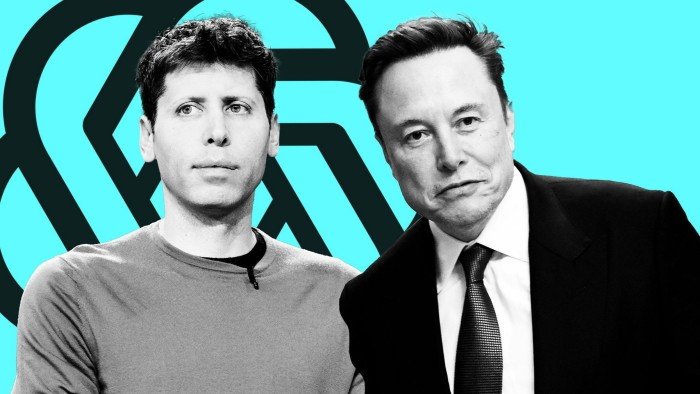
Will Elon Musk win his case against Sam Altman?
Will Elon Musk win his case against Sam Altman?
New here?
Understand this market
This market asks whether Elon Musk will win his lawsuit against Sam Altman and OpenAI in a California federal court. A Yes means the court formally sides with Musk — he gets a monetary award, wins the most important claims, or Altman's side drops all claims against him. A No means the court sides with Altman's team, the case settles without a clear payment to Musk, or the deadline passes without a final ruling in Musk's favor.
Order Book
Will Elon Musk win his case against Sam Altman?
Resolution Criteria
This market will resolve to “Yes” if the U.S. District Court in the Northern District of California sides with Elon Musk in Elon Musk v. Sam Altman et al by December 31, 2026, 11:59 PM ET. Otherwise, this market will resolve to “No”. If the case reaches a determination without settlement, the court will be considered to side with Musk based on the following criteria (in order of priority): 1. If Elon Musk receives a larger net monetary award than Altman et al (after offsetting any awards against the parties), the court will have sided with Musk. Compensatory damages, punitive damages, restitution, and statutory damages are included in monetary awards. Monetary awards do not include Attorney’s fees or other costs which are excluded from the monetary recovery calculation. 2. If there is no net monetary advantage for either party, the court will have sided with Musk if Musk prevails on claims seeking the largest amount of relief, in dollars, in the original pleadings of the case, as compared to Altman et al. If the relevant relief amounts are equivalent or can’t be determined, the court will have sided with Musk if Musk prevails on a greater number of primary causes of action than Altman et al. Procedural claims, discovery sanctions, and attorney's fee requests will not be considered primary causes of action. 3. If the case terminates without substantive judgment, the court will have sided with Musk if Altman et al voluntarily dismiss all claims against Elon Musk with prejudice. All other scenarios of termination without substantive judgment, including if there are no claims against Musk, will result in the court not siding with either party and will resolve this market to “No”. If Elon Musk and Altman et al settle this case with a disclosed net payment to Elon Musk, the court will have sided with Musk. If Elon Musk and Altman et al settle this case with a disclosed net payment to Altman et al, this market will resolve to “No”. If Elon Musk and Altman et al settle this case with mutual releases and no disclosed payment direction, or if settlement terms are sealed and a consensus of credible reporting does not indicate payment direction within 7 days of the settlement announcement, the court will not have sided with either party and this market will resolve to “No”. Additional notes: If the court issues a default judgment in favor of Elon Musk, this market will use the listed criteria above for resolution. If the court issues a default judgment against Elon Musk, this market will resolve to “No”. If the court issues a full summary judgment in favor of Elon Musk, the court will have sided with Musk. A partial summary judgment will apply to resolved claims only, and remaining claims will proceed under the above listed resolution criteria. A summary judgment on liability only will not constitute a court siding with either party until the damages are determined. Mistrials with prejudice will be considered to be case termination and will be evaluated according to criteria 3 above. Mistrials without prejudice, hung juries, or mistrials due to procedural errors will not constitute the court siding with either party. If retrial is ordered and occurs before December 31, 2026, 11:59 PM ET, resolution of this market will be based on the result of that retrial. Any sua sponte judicial dismissal will be treated according to whether the dismissal is with or without prejudice. If unspecified, it will be treated as without prejudice. This market applies only to trial-level case resolutions and does not include any appeals. Only claims directly involving Elon Musk will be considered; third-party claims, interpleader actions, and claims between other parties will not be considered. Procedural victories will not be considered as part of the court’s decision unless accompanied by substantive relief on the merits of the case. Injunctive relief will only count as the court’s decision if it provides the primary relief sought in the original pleadings. Case consolidation with other proceedings will not affect this market’s outcome unless the consolidated outcome directly resolves the dispute between Elon Musk and Altman et al. If there are multiple defendants, the court must side with Elon Musk relative to the combination of all opposing parties. Joint and several liability awards will be attributed to Elon Musk based on Musk’s individual liability percentage. Cross-claims between co-defendants will not affect the court’s decision relative to Elon Musk. The primary resolution source for this market will be official information from the relevant court; however, a consensus of credible reporting will also be used.
Read the full market guide →Prediction market trading on whether Elon Musk will win his lawsuit against Sam Altman and OpenAI shows volume heavily concentrated on a 'No' outcome, with the 'Yes' position — a ruling in Musk's favour by 31 December 2026 — representing a very small share of the market. The case is being heard in the U.S. District Court for the Northern District of California. Resolution requires a substantive court finding or disclosed settlement payment favouring Musk before the end of 2026.
Market structure
The market has a single primary outcome: whether Musk prevails, as defined by a net monetary award, a greater number of primary causes of action, or a disclosed net settlement payment in his favour, all before 31 December 2026. Trading is overwhelmingly concentrated on the 'No' outcome. Resolution draws on official court records as the primary source, supplemented by a consensus of credible reporting. Procedural victories, sealed settlements without disclosed payment direction, and mistrials without prejudice do not trigger a 'Yes' resolution.
Background
Elon Musk filed suit against Sam Altman, OpenAI, and associated parties in the Northern District of California, alleging that OpenAI abandoned its founding charitable mission as it transitioned toward a for-profit structure. Musk was an early backer and board member of OpenAI before departing in 2018. The lawsuit centres on claims that the organisation's shift toward commercialisation — most visibly through its deepening relationship with Microsoft — violated commitments made to Musk and the broader public interest. The case sits at the intersection of high-stakes technology policy and corporate governance, drawing significant media attention given the prominence of both principals and the broader debate over the direction of artificial intelligence development.
Key factors
Several structural factors shape the trajectory of this litigation. First, the court's management calendar in the Northern District of California will determine whether the case proceeds to trial or reaches dispositive motion practice before the December 2026 deadline. A case of this complexity could face scheduling delays, amended pleadings, or interlocutory disputes that push substantive resolution beyond the resolution window. Second, the specific resolution criteria require a net monetary award or a majority of primary causes of action — procedural wins, injunctions not sought as primary relief, and non-disclosed settlements all resolve to 'No', narrowing the conditions under which Musk prevails. Third, settlement dynamics are relevant: a mutual release without a disclosed payment direction also resolves to 'No', meaning even a negotiated exit may not satisfy the criteria. Fourth, OpenAI's ongoing corporate restructuring could generate new factual and legal developments that alter the claims landscape before trial. Finally, any counterclaims by Altman et al that succeed could affect the net-monetary calculation even if Musk prevails on some counts.
FAQ
How is the 'Will Elon Musk win his case against Sam Altman' market resolved?
Resolution requires a net monetary award in Musk's favour, Musk prevailing on the largest or greatest number of primary causes of action, or a disclosed net settlement payment to Musk — all evaluated against official court records from the U.S. District Court for the Northern District of California. Procedural victories alone do not count.
When does the Musk v. Altman prediction market resolve?
The market resolves by 31 December 2026 at 11:59 PM ET. If no substantive court finding or qualifying settlement occurs before that deadline, the market resolves 'No'. Retrials ordered and completed before the deadline are included; appeals are not.
What happens if Musk and Altman settle the case?
A settlement resolves 'Yes' only if there is a disclosed net payment to Musk. A net payment to Altman et al resolves 'No'. Mutual releases with no disclosed payment direction, or sealed settlements where credible reporting cannot confirm payment direction within seven days, also resolve 'No'.
What does the market currently show for Musk winning against Altman?
Trading is overwhelmingly concentrated on the 'No' outcome. The 'Yes' position — a court or settlement finding in Musk's favour before end of 2026 — represents a very small fraction of market volume, making it the heavily disfavoured outcome in current trading.
Paridesk is not a regulated financial advisor. The information above is for informational purposes only and does not constitute financial, investment, or trading advice. Prediction markets carry risk of total loss. Past patterns do not guarantee future outcomes.
Related Markets







Will Elon Musk win his case against Sam Altman?
7%