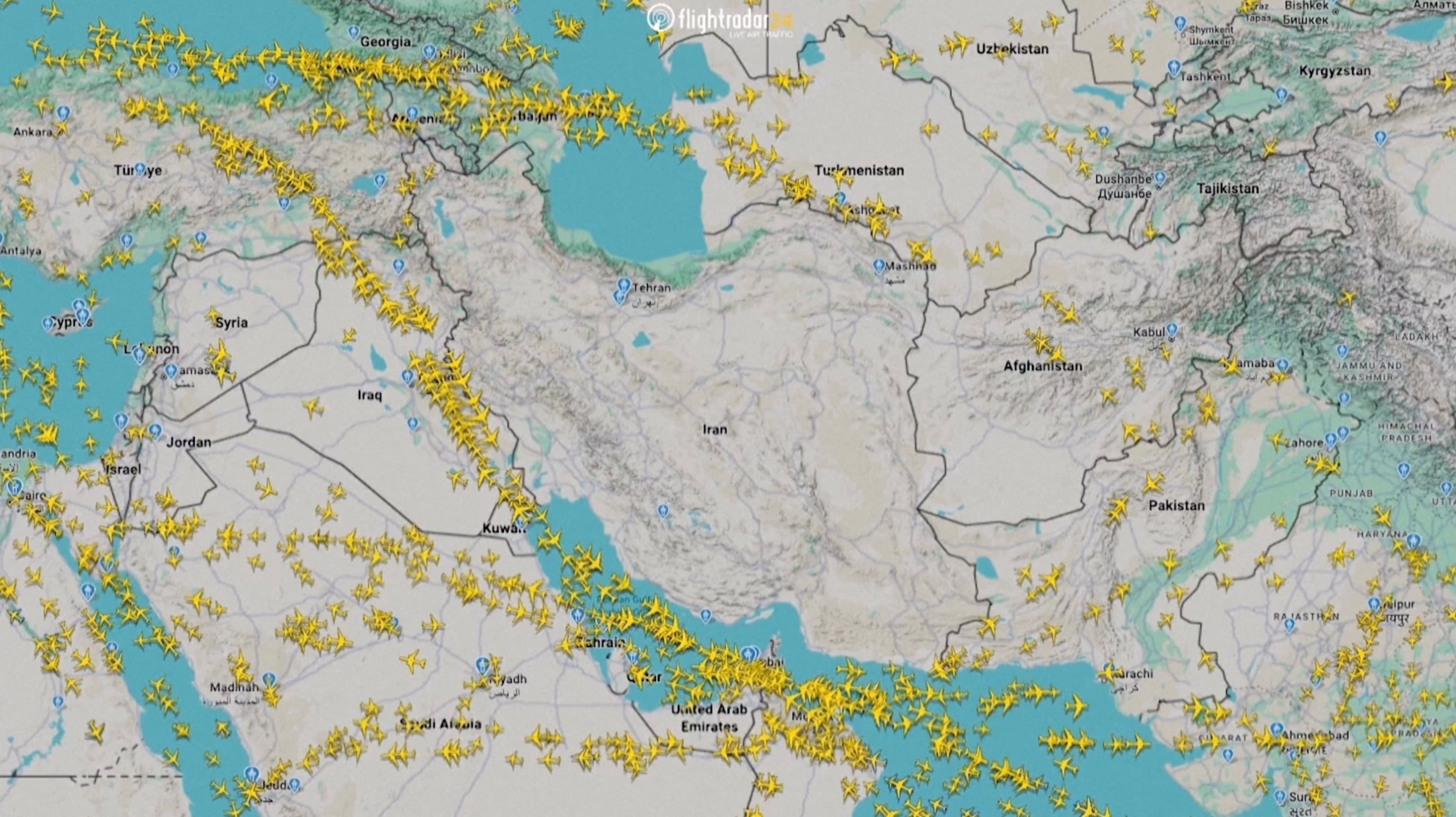
Iran closes its airspace by...?
June 30
Order Book
June 30
Resolution Criteria
This market will resolve to “Yes” if Iran initiates a major closure of its airspace, that is not solely due to weather conditions, by the listed date, 11:59 PM ET. Otherwise, this market will resolve to “No”. A “major closure” is defined as a broad closure, cancellation, or suspension of commercial flights transiting, arriving in, and departing from Iranian airspace or a major Iranian Airspace region. A qualifying closure must apply generally to flights across Iran or a major Iranian airspace region. Limited cancellations, delays, or other partial closures will not qualify. Limited exceptions to a broad closure, however, will not disqualify such a closure from counting (e.g. exceptions for certain flights pre-approved by the Iranian Civil Aviation Authority may be permitted). Any non-weather complete suspension of commercial arrivals and departures affecting at least two of the following airports will qualify: Imam Khomeini International Airport (IKA), Mehrabad Airport (THR), Mashhad International Airport (MHD), Shiraz International Airport (SYZ), or Isfahan International Airport (IFN). Qualifying previous examples include the January 2026 total closure of Iranian airspace except to international flights with express governmental permission (https://www.reuters.com/world/middle-east/iran-shuts-airspace-most-flights-flightradar24-says-2026-01-14/) and the April 2024 closure of Iran’s western airspace (https://www.reuters.com/world/middle-east/iranian-airports-cancel-flights-until-monday-morning-2024-04-14/). Non-qualifying examples include the January 27, 2026 partial closure of Iranian airspace around the Strait of Hormuz (https://www.aa.com.tr/en/middle-east/iran-issues-airspace-notice-for-military-drills-near-strait-of-hormuz/3812508) and the January 25 - April 25, 2026 VFR (Visual Flight Rules) flights suspension which did not broadly close commercial aviation in a qualifying region (https://www.intellinews.com/iran-suspends-general-aviation-and-vfr-flights-in-new-airspace-directive-421997/). Warnings, No-Fly-Zones, or other flight restrictions imposed by airlines or countries other than Iran will not be sufficient for a “Yes” resolution. Airspace closures which occur solely due to weather conditions will not qualify. The primary resolution sources for this market will be official information from Iranian aviation authorities and a consensus of credible reporting.
Prediction markets show airspace closure probabilities concentrated at the higher end across all listed dates, with June 15 the heaviest-backed outcome and May 24 the least heavily backed among current top outcomes. The market asks whether Iran will initiate a major, non-weather commercial airspace closure by each specific date. Resolution is determined by official Iranian aviation authority communications and a consensus of credible reporting, with the primary deadline set at 31 May 2026.
Market structure
The market offers eleven outcome dates, each resolving independently to 'Yes' or 'No'. Volume is heavily concentrated toward 'Yes' resolutions across all listed dates. A qualifying closure must affect commercial flights broadly across Iran or a major Iranian airspace region, covering at least two of five named major airports. Weather-related closures and restrictions imposed by foreign governments or airlines do not qualify. Resolution draws on official Iranian civil aviation authority statements and credible international reporting.
Background
Iran has closed or significantly restricted its airspace on several notable occasions in recent years, most prominently in April 2024 during a period of heightened regional military tension with Israel, and again in January 2026 when a near-total closure was imposed except for flights carrying express governmental permission. These episodes reflect Iran's practice of restricting airspace in response to security situations, military exercises, or domestic crises. The country sits at a strategic crossroads for international aviation between Europe, South Asia, and East Asia, meaning major closures carry significant consequences for airlines and air traffic management across a broad corridor. Iran's Civil Aviation Organisation holds the authority to implement and lift such restrictions.
Key factors
Several structural factors bear on whether a qualifying closure occurs by each listed date. Regional security dynamics, including the state of Iran's relations with neighbouring states and major powers, have historically been the primary driver of sudden airspace restrictions. Domestic political developments — including internal unrest, military activity, or significant government announcements — have also preceded closures. The threshold for resolution is specific: at least two of five named major airports must be affected by a non-weather suspension of commercial arrivals and departures. This means localised military exercise notices or partial route restrictions around bodies of water, such as the Strait of Hormuz, do not qualify. The gap between consecutive dates in the market means that a closure occurring between two listed dates would resolve the earlier date 'No' and the later date 'Yes', making precise timing a consequential variable. Diplomatic negotiations, sanctions pressure, and any escalation in the broader Middle East security environment all feed into the likelihood and timing of a qualifying event.
FAQ
How is the Iran airspace closure market resolved?
The market resolves 'Yes' if Iran initiates a broad, non-weather commercial airspace closure by the listed date, affecting at least two of five named major airports: IKA, THR, MHD, SYZ, or IFN. Resolution relies on official Iranian aviation authority statements and a consensus of credible international reporting.
When does the Iran airspace closure market resolve?
Each outcome resolves at 11:59 PM ET on its listed date. The furthest listed resolution deadline in the current set is 31 May 2026, though additional date outcomes such as June 15 and June 30 extend the window. Resolution triggers as soon as a qualifying closure is confirmed.
What if Iran imposes a partial or localised airspace restriction rather than a full closure?
Partial restrictions do not qualify. A closure must broadly affect commercial flights across Iran or a major Iranian airspace region, covering at least two named major airports. Localised notices, military exercise zones such as the January 2026 Strait of Hormuz restriction, and VFR-only suspensions have been explicitly cited as non-qualifying examples.
What does the Iran airspace closure market currently show?
Volume is heavily concentrated toward 'Yes' resolutions across all listed dates. The June 15 outcome is the heaviest-backed, while May 24 carries somewhat less concentrated support among the current top outcomes. All dates show broadly similar positioning, reflecting the market's assessment that a qualifying closure is widely anticipated within the timeframe.
Paridesk is not a regulated financial advisor. The information above is for informational purposes only and does not constitute financial, investment, or trading advice. Prediction markets carry risk of total loss. Past patterns do not guarantee future outcomes.
Related Markets








June 30
25%