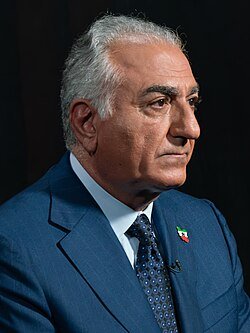
Will Reza Pahlavi lead Iran in 2026?
Will Reza Pahlavi lead Iran in 2026?
Order Book
Will Reza Pahlavi lead Iran in 2026?
Resolution Criteria
This market will resolve to “Yes” if Reza Pahlavi de facto holds and exercises the powers of the head of state of Iran by December 31, 2026, 11:59 PM ET. Otherwise, this market will resolve to “No.” Reza Pahlavi will be considered to hold power if he exercises primary governing authority over the Iranian state during the specified timeframe, including effective control over the armed forces, national institutions, and core executive decision-making, regardless of formal title, constitutional designation, or international recognition. Formal appointment, recognition by the United Nations, or recognition by foreign governments is not required. Indicators of de facto authority may include control over the armed forces and security services; control over executive ministries and state administrative institutions; enforcement of national laws; issuance of binding national directives; and effective control over the capital and core state infrastructure. Symbolic status, foreign recognition without domestic control, exile leadership without effective authority inside Iran, nomination without effective authority, or ceremonial or transitional status without governing control will not qualify. If Iran experiences a period in which no individual exercises effective governing control, this will not alone qualify for a “Yes” resolution unless Reza Pahlavi subsequently meets the criteria above within the specified timeframe. The primary resolution source for this market will be a consensus of credible reporting.
Prediction markets currently show 'Yes' as a heavily marginal outcome for Reza Pahlavi leading Iran in 2026, with volume concentrated overwhelmingly on a 'No' resolution. The market resolves 'Yes' only if Pahlavi de facto exercises governing authority over the Iranian state — including control of the armed forces, ministries, and core institutions — before 31 December 2026. Resolution is based on a consensus of credible reporting rather than formal recognition or constitutional appointment.
Market structure
This is a binary market with a single outcome tracked: whether Reza Pahlavi holds de facto power in Iran by 31 December 2026. Trading is heavily concentrated against resolution, reflecting the distance between current political conditions in Iran and the scenario required. The resolution bar is substantive — symbolic status, exile leadership, or ceremonial transitional roles do not qualify. The primary resolution source is a consensus of credible reporting.
Background
Reza Pahlavi is the eldest son of Mohammad Reza Shah, the last Shah of Iran, who was deposed in the 1979 Islamic Revolution. Now based in the United States, Pahlavi has spent decades as a prominent voice in the Iranian diaspora, calling for regime change and a democratic transition in Iran. He has engaged with opposition coalitions and international policymakers, particularly since the 'Woman, Life, Freedom' protest movement that erupted in Iran following the death of Mahsa Amini in September 2022. The Islamic Republic, despite significant internal pressures, retains control of the security apparatus and state institutions. No transition of power has occurred, and the governing structure established after 1979 remains formally intact as of the time this market was created.
Key factors
Several structural factors bear on this market's resolution. First, the durability of the Islamic Republic's security and institutional apparatus determines whether any leadership transition is possible within the timeframe. Second, the scale, organisation, and cohesion of domestic opposition movements inside Iran will affect whether pressure for change translates into effective governing disruption. Third, Pahlavi's own political positioning — currently as a diaspora figurehead rather than an organised movement with territorial presence — creates a gap between symbolic relevance and the de facto authority the resolution criteria require. Fourth, international dynamics, including sanctions policy, regional geopolitics, and any foreign-power involvement, could accelerate or constrain a transition scenario. Fifth, the resolution criteria explicitly exclude transitional or ceremonial status, meaning even a partial or contested power-sharing arrangement would not qualify unless Pahlavi demonstrably controls the armed forces, executive ministries, and core state infrastructure. Each of these conditions would need to be met simultaneously within a narrow window.
FAQ
How is the 'Will Reza Pahlavi lead Iran in 2026?' market resolved?
The market resolves 'Yes' if Pahlavi de facto exercises the powers of head of state — including control over Iran's armed forces, ministries, and core executive functions — before 31 December 2026. Symbolic status, exile leadership, or ceremonial roles do not qualify. Resolution is determined by a consensus of credible reporting.
When does the Reza Pahlavi Iran leadership market resolve?
The market resolves by 31 December 2026 at 11:59 PM ET. If Pahlavi does not meet the de facto authority criteria before that deadline, the market resolves 'No'. There is no extended window; the deadline is fixed.
What happens if Iran has no clear leader or is in a state of civil conflict before the deadline?
A period in which no individual exercises effective governing control does not alone trigger a 'Yes' resolution. Pahlavi must subsequently meet the full de facto authority criteria — control of armed forces, institutions, and executive functions — within the timeframe for the market to resolve 'Yes'.
What does the market currently show for Reza Pahlavi leading Iran?
Trading is heavily concentrated on a 'No' outcome. The 'Yes' position — that Pahlavi will hold de facto governing authority over Iran by end of 2026 — is a marginal position in the market, reflecting the significant structural and political distance from current conditions in Iran to the scenario the resolution criteria require.
Paridesk is not a regulated financial advisor. The information above is for informational purposes only and does not constitute financial, investment, or trading advice. Prediction markets carry risk of total loss. Past patterns do not guarantee future outcomes.
Related Markets




Will Reza Pahlavi lead Iran in 2026?
3%