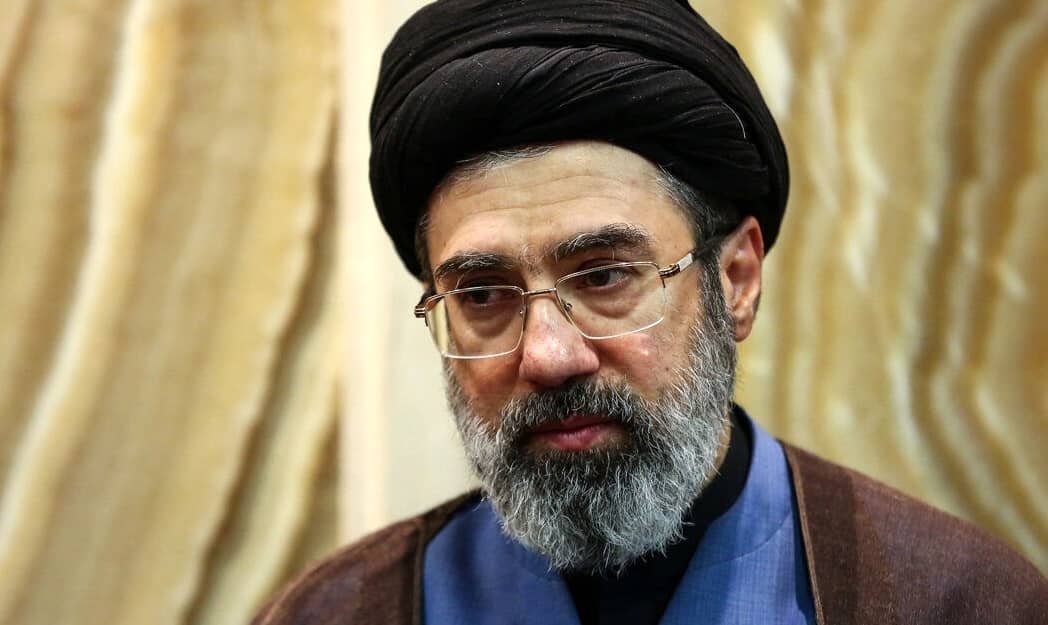
Iran leadership change by...?
June 30, 2027
Order Book
June 30, 2027
Resolution Criteria
This market will resolve to "Yes" if the Supreme Leader of Iran, Mojtaba Khamenei, ceases to be the de facto leader of Iran at any point between market creation and the listed date (ET). Otherwise, this market will resolve to "No". Mojtaba Khamenei will be considered to no longer be the de facto leader of Iran if he is removed from power, is detained, or otherwise loses his position or is prevented from acting as the de facto leader of Iran within this market's timeframe. An official announcement of Mojtaba Khamenei’s resignation or removal will qualify for a "Yes" resolution regardless of when the announced departure goes into effect. The primary resolution source for this market will be a consensus of credible reporting.
Prediction markets are tracking whether Mojtaba Khamenei will cease to be Iran's de facto Supreme Leader before the end of 2026, with trading spread across several monthly resolution dates. Volume is most heavily concentrated on the December 31 outcome, followed by June 30, suggesting market participants are not converging on a near-term resolution. The market resolves 'Yes' if Khamenei is removed, detained, or otherwise prevented from exercising de facto leadership before the relevant deadline.
Market structure
The market offers six outcome dates running through December 31, 2026. Volume is broadly distributed but most heavily concentrated on the end-of-year deadline, with June 30 the second most backed date and May 31 carrying notably less support. Resolution requires a consensus of credible reporting confirming that Mojtaba Khamenei has ceased to function as de facto Supreme Leader — through removal, detention, resignation, or equivalent loss of authority. An announced departure qualifies for 'Yes' resolution even if the effective date falls later.
Background
Mojtaba Khamenei, son of the longstanding Supreme Leader Ali Khamenei, has been widely discussed in regional and international coverage as a likely successor within Iran's clerical establishment. Ali Khamenei has held the position of Supreme Leader since 1989, making his office one of the most enduring concentrations of power in the Middle East. Iran's political system places the Supreme Leader above elected institutions, controlling the armed forces, judiciary, and state media. Succession in this system is determined by the Assembly of Experts, a body of senior clerics. Mojtaba Khamenei's reported consolidation of influence within the Islamic Revolutionary Guard Corps and clerical networks has drawn sustained attention from analysts monitoring Iran's internal power dynamics.
Key factors
The primary structural factor is the health and political standing of any incumbent or newly installed Supreme Leader — a sudden incapacitation, internal power struggle, or military intervention could accelerate a leadership change. Iran's Assembly of Experts holds formal authority over appointing and removing the Supreme Leader, meaning institutional dynamics within that body are a key dependency. External pressure, including sanctions, regional conflict, or direct military confrontation, could destabilise internal power structures in ways that affect leadership continuity. Domestic unrest — as seen in protest cycles in recent years — has historically tested the resilience of the clerical system without producing leadership change, but cumulative pressure remains a variable. The market's contingency structure also matters: an announced resignation or removal qualifies even if the effective transition is delayed, meaning a formal declaration alone would trigger resolution.
FAQ
How is the Iran leadership change market resolved?
The market resolves 'Yes' if Mojtaba Khamenei is removed from power, detained, or otherwise prevented from acting as Iran's de facto Supreme Leader. An official announcement of resignation or removal qualifies even if the departure has not yet taken effect. Resolution is based on a consensus of credible reporting.
When does the Iran leadership change market resolve?
The market has multiple resolution dates running through December 31, 2026 (ET). Each outcome date resolves independently — if a qualifying leadership change occurs before a given date, the corresponding outcome resolves 'Yes'. The final deadline is December 31, 2026.
What happens if Mojtaba Khamenei never formally holds the Supreme Leader title but still exercises power?
The resolution criteria focus on de facto leadership rather than formal title. If Khamenei exercises effective supreme authority without a formal appointment, that would likely not constitute a 'Yes' resolution. Conversely, losing de facto control — even without a formal announcement — could qualify if credible reporting confirms it.
What does the Iran leadership change market currently show?
Trading is most heavily concentrated on the December 31, 2026 outcome, with June 30 the second most backed date. The May 31 outcome carries considerably less volume. The distribution suggests market participants broadly do not anticipate a near-term leadership change, though interest is spread across multiple timeframes.
Paridesk is not a regulated financial advisor. The information above is for informational purposes only and does not constitute financial, investment, or trading advice. Prediction markets carry risk of total loss. Past patterns do not guarantee future outcomes.
Related Markets




June 30, 2027
25%