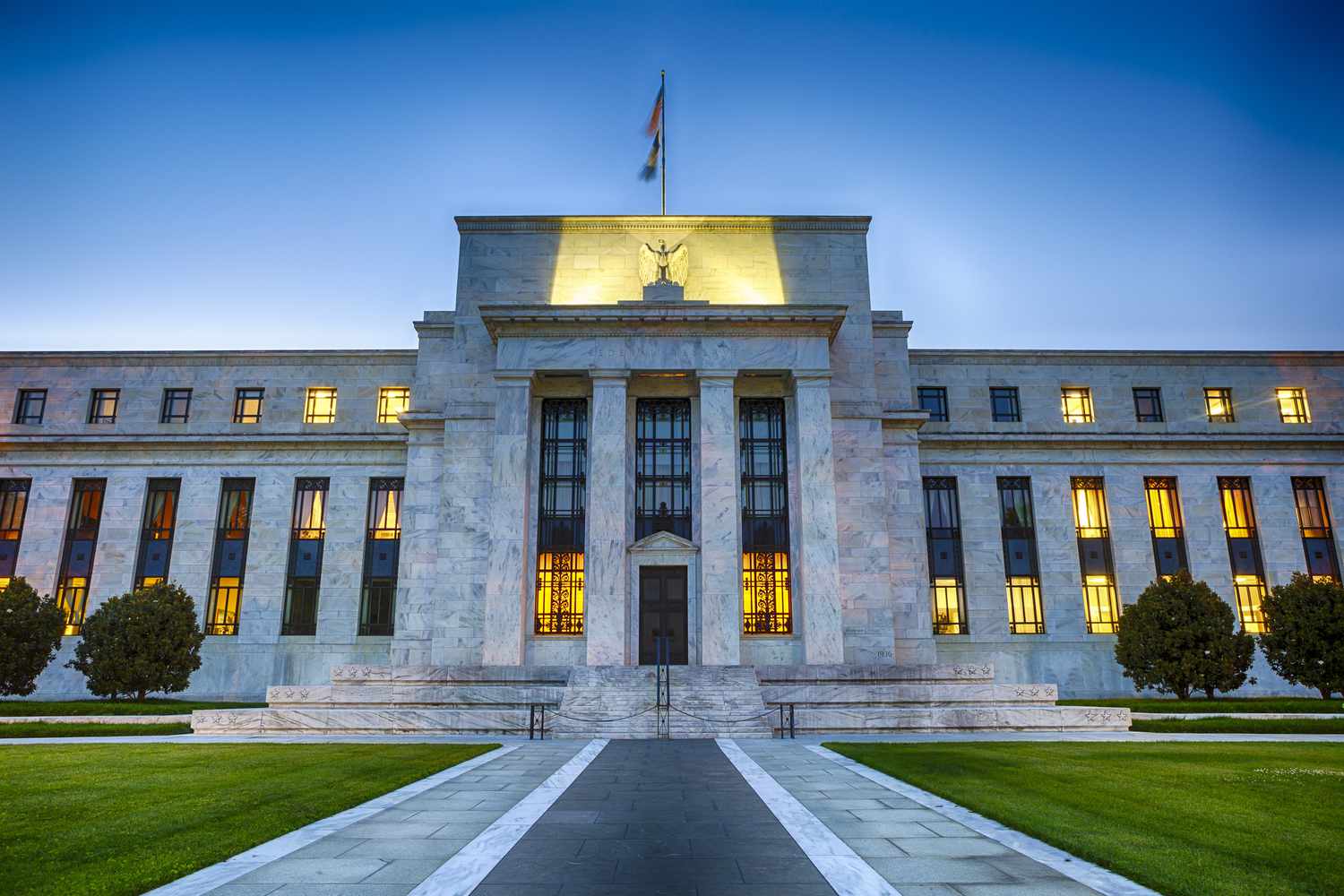
Fed decisions (Mar-Jun)
Pause–Pause–Pause
New here?
Understand this market
This market is asking whether the US Federal Reserve will leave interest rates completely unchanged at all three of its upcoming meetings in March, April, and June 2026. The Fed sets a key interest rate that affects borrowing costs across the whole economy — mortgages, car loans, business credit. A 'pause' means they leave that rate exactly where it is. A 'cut' means they lower it. Right now, the market is almost certain all three meetings end with no change at all.
Order Book
Pause–Pause–Pause
Resolution Criteria
The FED interest rates are defined in this market by the upper bound of the target federal funds rate. The decisions on the target federal funds rate are made by the Federal Open Market Committee (FOMC) meetings. This market will resolve according to the decisions made by the next three Federal Open Market Committee (FOMC) meetings: March 17-18, 2026; April 28-29; and June 16-17. A qualifying cut occurs when the new upper bound of the target federal funds rate is lower compared to the level it was prior to the respective meeting. A qualifying hike occurs when the new upper bound of the target federal funds rate is higher compared to the level it was prior to the respective meeting. A qualifying pause occurs when the new upper bound of the target federal funds rate is equal to the level it was prior to the respective meeting. If the Fed publishes a different combination than any listed, this market will resolve to "Other". Any rate hike will be encompassed by "Other". Emergency rate cuts outside the regularly scheduled meetings will not be considered. The resolution source for this market is the FOMC’s statement after its meetings: https://www.federalreserve.gov/monetarypolicy/fomccalendars.htm The level and change of the target federal funds rate is also published at the official website of the Federal Reserve: https://www.federalreserve.gov/monetarypolicy/openmarket.htm
Read the full market guide →Prediction market trading on the Federal Reserve's next three interest rate decisions — covering FOMC meetings in March, April, and June 2026 — is overwhelmingly concentrated on a single outcome: three consecutive pauses with no change to the federal funds rate. A small residual share is split between a pause-pause-cut sequence and the catch-all 'Other' category. Resolution is determined by official FOMC statements published after each meeting, with the final decision due 17 June 2026.
Market structure
Nine outcomes are available, covering combinations of pauses and cuts across three FOMC meetings (March 17-18, April 28-29, and June 16-17, 2026). Volume is heavily concentrated on Pause–Pause–Pause, with Pause–Pause–Cut holding a sliver of support and Other capturing minimal residual interest. Resolution uses the upper bound of the target federal funds rate as published in official FOMC statements. Emergency inter-meeting cuts do not qualify. Any rate hike falls under 'Other'.
Background
The Federal Open Market Committee sets the target federal funds rate, the benchmark short-term interest rate that flows through to borrowing costs across the US and global economy. After a sustained hiking cycle that began in 2022 to combat elevated inflation, the Fed shifted toward cuts in late 2024 before signalling a more cautious stance entering 2025. Market participants now interpret the committee's posture as a holding pattern, weighing residual inflation concerns against signs of labour market softening. The three scheduled meetings in this market — March, April, and June 2026 — represent a roughly four-month window during which the committee's collective judgment on economic conditions will be formalised and publicly announced.
Key factors
Several structural factors bear on whether the committee deviates from a pause sequence. Inflation data released between now and June 2026 — particularly the PCE price index, the Fed's preferred gauge — could shift the balance toward easing if readings fall convincingly toward the 2% target. Conversely, a resurgence in price pressures or wage growth could entrench the pause or, in an extreme scenario, produce a hike, which would resolve under 'Other'. Labour market conditions, GDP revisions, and financial stability concerns all feed into FOMC deliberations. External shocks — geopolitical events, commodity price spikes, or significant dollar movements — can alter the committee's assessment rapidly. The sequencing of meetings also matters: the March decision sets the baseline for April, and April's outcome frames the June decision, meaning a deviation at any stage alters the probability space for subsequent meetings. Chair commentary and the minutes from intervening meetings provide the primary forward guidance signals the market will reprice around.
FAQ
How is the Fed decisions (Mar–Jun) market resolved?
Resolution is based on the upper bound of the target federal funds rate as stated in official FOMC post-meeting statements. A cut means the upper bound falls; a pause means it holds; any hike or unlisted combination resolves as 'Other'. Emergency inter-meeting cuts are excluded.
When does the Fed decisions (Mar–Jun) market resolve?
The market resolves after the third and final qualifying FOMC meeting, scheduled for 16–17 June 2026. The resolution deadline is 17 June 2026. Earlier meetings on 17–18 March and 28–29 April determine the first two legs of the outcome sequence.
What happens if the Fed makes an emergency rate cut between meetings?
Emergency or inter-meeting rate cuts are explicitly excluded from resolution. Only decisions announced at the three scheduled FOMC meetings — March, April, and June 2026 — count toward the outcome. An inter-meeting cut would not alter the resolution sequence.
What does the market currently show?
Trading is overwhelmingly concentrated on Pause–Pause–Pause, reflecting a strong consensus that the Fed will hold rates unchanged at all three meetings. Pause–Pause–Cut holds a small share of volume, while the 'Other' category — which covers hikes and any unlisted combination — attracts minimal interest.
Paridesk is not a regulated financial advisor. The information above is for informational purposes only and does not constitute financial, investment, or trading advice. Prediction markets carry risk of total loss. Past patterns do not guarantee future outcomes.
Related Markets




Pause–Pause–Pause
99%