Hantavirus pandemic in 2026?
Hantavirus pandemic in 2026?
Order Book
Hantavirus pandemic in 2026?
Resolution Criteria
This market will resolve to "Yes" if the World Health Organization explicitly characterizes Hantavirus, Hantavirus Pulmonary Syndrome (HPS), Hemorrhagic Fever with Renal Syndrome (HFRS), or a Hantavirus-related outbreak as a "pandemic" in an official public communication between market creation and December 31, 2026, 11:59 PM ET. Otherwise, this market will resolve to "No". An explicit characterization includes official WHO statements, reports, press briefings, or publications that clearly describe the outbreak as a "pandemic." A Public Health Emergency of International Concern (PHEIC) alone will not qualify unless it is also described as a pandemic. The primary resolution source for this market will be official WHO communications. A consensus of credible reporting may also be used.
Prediction markets place the probability of a Hantavirus pandemic being declared by the WHO in 2026 at a very low level, with the outcome heavily concentrated on a 'No' resolution. The market resolves 'Yes' only if the WHO explicitly characterises Hantavirus, Hantavirus Pulmonary Syndrome, or Hemorrhagic Fever with Renal Syndrome as a pandemic in an official communication by 31 December 2026. Absent that specific language, the market resolves 'No' regardless of any other WHO alert level.
Market structure
This is a binary market with a single tracked outcome — whether the event resolves 'Yes'. Market volume is heavily concentrated against a pandemic declaration, reflecting the rarity of such an event. Resolution requires explicit WHO language describing a Hantavirus-related outbreak as a 'pandemic'; a Public Health Emergency of International Concern (PHEIC) alone does not qualify. The resolution deadline is 31 December 2026, with official WHO communications as the primary source of truth.
Background
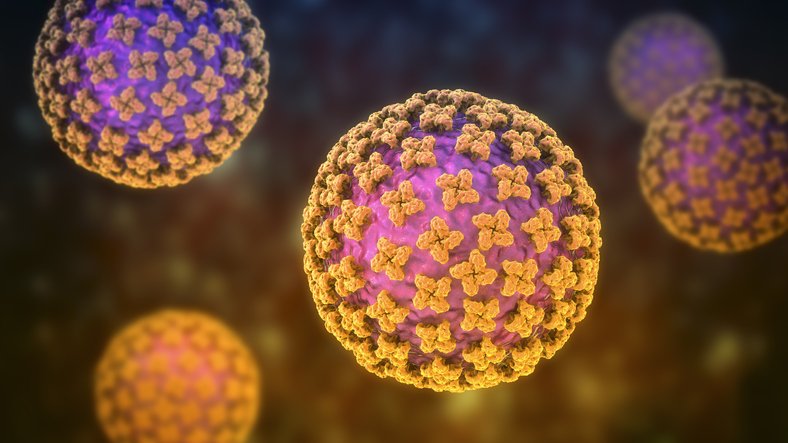
Hantaviruses are a family of rodent-borne viruses that cause two serious syndromes in humans: Hantavirus Pulmonary Syndrome (HPS), prevalent in the Americas, and Hemorrhagic Fever with Renal Syndrome (HFRS), more common across Europe and Asia. Unlike respiratory viruses, Hantavirus does not transmit between humans — infection requires direct contact with infected rodents or their droppings. This biological constraint has historically limited outbreak scale. Notable episodes include the 1993 Four Corners outbreak in the United States and periodic HFRS surges in China and Scandinavia linked to rodent population cycles. The WHO monitors Hantavirus as a disease of concern but has never declared a Hantavirus pandemic. The question periodically resurfaces in public discourse following clusters of cases or novel strain detection.
Key factors
The central structural factor is Hantavirus's established mode of transmission: the absence of documented sustained human-to-human spread makes pandemic-scale diffusion biologically difficult under current understanding. A pandemic declaration would therefore likely require either the emergence of a novel Hantavirus variant capable of human-to-human transmission or a dramatic, geographically simultaneous surge in zoonotic cases across multiple continents compelling WHO to adopt pandemic terminology. Rodent population dynamics — which fluctuate with climate, land use, and food availability — influence HFRS and HPS incidence cyclically. Increased human encroachment into rodent habitats, driven by deforestation or displacement, could elevate exposure. The resolution criterion also sets a precise linguistic bar: WHO must use the word 'pandemic' explicitly. Even a PHEIC declaration, historically a rare and serious designation, would not resolve this market 'Yes' unless paired with pandemic language. The distinction between these WHO alert categories is therefore a key contingency.
FAQ
How is the Hantavirus pandemic 2026 market resolved?
The market resolves 'Yes' only if the WHO explicitly uses the word 'pandemic' to describe a Hantavirus, HPS, or HFRS outbreak in an official communication — such as a statement, report, or press briefing — before 31 December 2026. A PHEIC declaration alone does not qualify unless pandemic language accompanies it.
When does the Hantavirus pandemic 2026 market resolve?
The market resolves by 31 December 2026. If the WHO issues qualifying pandemic language at any point before that deadline, the market resolves 'Yes' immediately. If no such characterisation is made by year-end, it resolves 'No'.
What happens if the WHO declares a PHEIC for Hantavirus but does not call it a pandemic?
A PHEIC declaration alone is insufficient for a 'Yes' resolution. The resolution criteria explicitly state that a PHEIC does not qualify unless the WHO also describes the situation using pandemic language in the same or a separate official communication.
What does the Hantavirus pandemic 2026 market currently show?
Market volume is heavily concentrated on a 'No' outcome, with the 'Yes' position attracting very limited backing. This reflects the absence of any current Hantavirus outbreak at pandemic scale and the virus's biological constraints around human-to-human transmission.
Paridesk is not a regulated financial advisor. The information above is for informational purposes only and does not constitute financial, investment, or trading advice. Prediction markets carry risk of total loss. Past patterns do not guarantee future outcomes.
Related Markets








Hantavirus pandemic in 2026?
2%