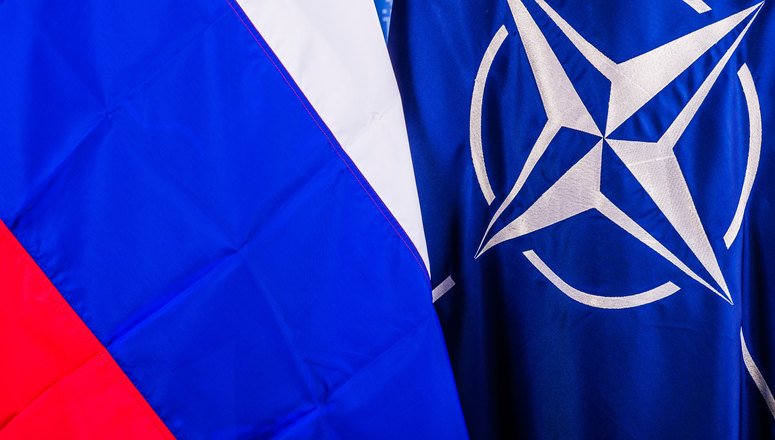
NATO x Russia military clash by...?
December 31
Order Book
December 31
Resolution Criteria
This market will resolve to "Yes" if there is a military encounter between the military forces of a NATO country and Russia between September 23 and December 31, 2025, 11:59 PM ET. Otherwise, this market will resolve to "No". A "military encounter" is defined as any incident involving the use of force such as missile strikes, artillery fire, exchange of gunfire, or other forms of direct military engagement between NATO and Russian military forces. Non-violent actions, such as airspace violations, firing of warning shots (such as the June, 2021 Black Sea Confrontations between Russian forces and HMS Defender), or cyberattacks will not qualify. Interception of missiles or other one-way attack or loitering munitions (e.g. Shahed drones) which are targeting a 3rd party other than the listed countries or their respective forces will not alone qualify. Shooting down UAVs which are not munitions (e.g. MQ-9, Orlan 10, Orion, Bayraktar TB2, etc.) will qualify. Intentional physical collisions, including aerial interceptions and naval ramming without the direct use of weaponry, such as the 2023 Black Sea incident—where a Russian Su-27 damaged a U.S. MQ-9 Reaper drone's propeller, leading to its crash— will not qualify regardless of damage. Military contractors will qualify only if confirmed to be operating under the direct command or coordination of the respective state’s armed forces (e.g. the Battle of Khasham would not qualify). The resolution source for this market will be a consensus of credible reporting.
Prediction markets currently show a broadly distributed field across resolution windows, with the December 31 deadline carrying notably heavier backing than the June 30 window. The market asks whether a direct military encounter — defined narrowly as actual use of force — will occur between NATO and Russian forces before the end of 2025. Resolution relies on a consensus of credible reporting rather than any single official source.
Market structure
The market offers four outcome windows, with volume most concentrated on the December 31 deadline and considerably lighter backing on June 30. Resolution requires a confirmed use of force — missile strikes, artillery, gunfire, or equivalent direct engagement — between NATO member state forces and Russian forces. Non-violent incidents, cyberattacks, warning shots, and physical collisions without weapons are explicitly excluded. The resolution source is a consensus of credible reporting.
Background
The question of a direct NATO-Russia military confrontation has become one of the most closely watched geopolitical risk assessments since Russia's full-scale invasion of Ukraine in February 2022. NATO member states have supplied Ukraine with weapons, intelligence, and training, while Russia has repeatedly warned of escalation thresholds. Several near-miss incidents — including drone incursions into NATO airspace and the 2023 Black Sea collision involving a US MQ-9 Reaper — have tested the boundaries of direct confrontation without triggering it. The market's narrow definition of 'military encounter' deliberately excludes many of the grey-zone incidents that have characterised this period, focusing on unambiguous kinetic exchanges between state forces.
Key factors
The resolution window runs to 31 December 2025, meaning several months of an active conflict environment remain in scope. Key structural factors include the pace and character of the Ukraine war, any expansion of NATO operational support roles closer to active combat zones, the risk of miscalculation during aerial interceptions or naval encounters in the Baltic or Black Seas, and the involvement of NATO member forces in air defence operations. The resolution criteria draw careful distinctions: shooting down a non-munition UAV qualifies, but intercepting a Shahed drone targeting a third party does not. Contractor involvement only qualifies if forces are under direct state command. These definitional boundaries mean that many plausible escalation incidents would still resolve 'No'. Political developments — including ceasefire negotiations, US-Russia diplomatic contacts, or any formal NATO posture changes — could materially alter the underlying risk environment before the deadline.
FAQ
How is the NATO-Russia military clash market resolved?
The market resolves 'Yes' if a confirmed use of force — such as missile strikes, artillery fire, or exchange of gunfire — occurs directly between NATO member state forces and Russian forces. Non-violent incidents, cyberattacks, warning shots, and unarmed collisions are explicitly excluded. Resolution is based on a consensus of credible reporting.
When does the NATO-Russia military clash market resolve?
The market has multiple resolution windows. The active window for a direct military encounter runs through 31 December 2025 at 11:59 PM ET. A qualifying incident at any point before that deadline would trigger 'Yes' resolution; absence of such an incident by the deadline resolves the market 'No'.
What happens if a NATO aircraft shoots down a Russian drone — does that qualify?
It depends on the drone type. Shooting down a non-munition UAV — such as an MQ-9, Orlan-10, or Bayraktar TB2 — would qualify. However, intercepting a Shahed-type loitering munition targeting a third party other than NATO or Russian forces would not qualify under the market's resolution criteria.
What does the NATO-Russia clash market currently show?
Volume is concentrated on the December 31 window, which carries the heaviest backing of the outcomes shown. The June 30 window attracts considerably lighter support. The distribution reflects the extended time horizon of the later deadline rather than any single dominant view on near-term escalation.
Paridesk is not a regulated financial advisor. The information above is for informational purposes only and does not constitute financial, investment, or trading advice. Prediction markets carry risk of total loss. Past patterns do not guarantee future outcomes.
Related Markets





December 31
17%