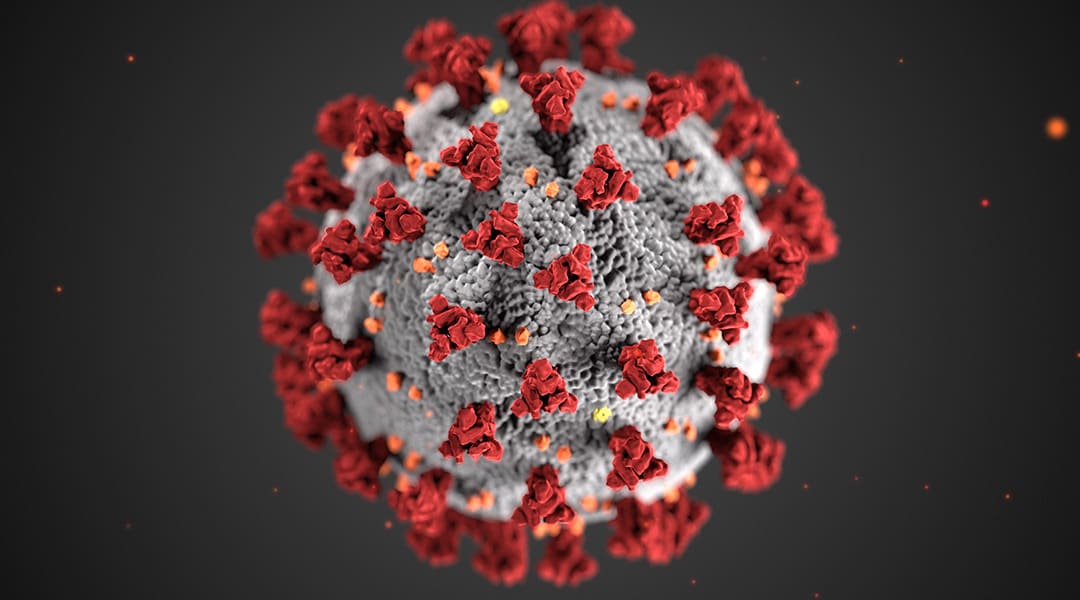
New pandemic in 2026?
Order Book
New pandemic in 2026?
Resolution Criteria
This market will resolve to "Yes" if the World Health Organization (WHO) declares any disease a pandemic between January 1, 2026 and December 31, 2026 11:59 PM ET. Otherwise, this market will resolve to "No". The resolution source will be official announcements from the World Health Organization.
Prediction market trading on whether the WHO will declare a new pandemic in 2026 is heavily concentrated on the 'No' outcome, making a formal pandemic declaration the minority-backed position. The market resolves to 'Yes' only if the World Health Organization issues an official pandemic declaration for any disease between 1 January and 31 December 2026. Volume is sharply skewed, with a pandemic declaration remaining the heavily minority-backed outcome.
Market structure
This is a binary Yes/No market with a single resolution trigger: an official WHO pandemic declaration for any disease within the 2026 calendar year. Trading is heavily concentrated on the 'No' outcome, with the 'Yes' position representing a small minority of market weight. Resolution source is official WHO announcements. The deadline is 31 December 2026. No formal fallback mechanism is specified beyond the end-of-year cutoff.
Background
The WHO last declared a pandemic in March 2020 for COVID-19, the first such declaration in over a decade following the 2009 H1N1 pandemic. The organisation has faced sustained scrutiny over its declaration thresholds and the timing of that announcement, prompting internal reviews of its alert frameworks. Since COVID-19, multiple disease outbreaks have been monitored — including mpox, which received a Public Health Emergency of International Concern (PHEIC) designation in 2022 and again in 2024 — but none has crossed the threshold of a formal pandemic declaration. The WHO's pandemic terminology is notably distinct from its PHEIC mechanism, meaning a high-profile outbreak can trigger the latter without satisfying the former. This distinction is central to how this market resolves.
Key factors
Several structural factors shape the probability of a WHO pandemic declaration in 2026. The WHO's own definition requires sustained human-to-human transmission across multiple countries or continents on a significant scale; not all major outbreaks reach this threshold. The organisation's ongoing reforms to its International Health Regulations, adopted in 2024, affect how and when emergency language is applied. Surveillance capacity varies significantly across member states, meaning novel pathogens may circulate before detection systems flag them. Known disease risks — including influenza variants with pandemic potential, coronaviruses, and filoviruses — are under continuous monitoring by WHO and national agencies. A declaration also carries political and economic consequences that historically influence the pace of formal announcements. Conversely, the absence of a currently circulating high-risk novel pathogen reduces the near-term trigger risk, though by definition pandemic threats are difficult to forecast in advance.
FAQ
How is the 'New pandemic in 2026' market resolved?
The market resolves 'Yes' if the World Health Organization issues an official pandemic declaration for any disease between 1 January 2026 and 31 December 2026. The resolution source is formal WHO announcements only. A PHEIC designation or national-level emergency declaration does not qualify.
When does the 'New pandemic in 2026' market resolve?
The market resolves at the end of the 2026 calendar year — specifically by 31 December 2026 at 11:59 PM ET. If no WHO pandemic declaration is issued before that deadline, the market resolves 'No' at that point.
What happens if the WHO declares a Public Health Emergency but not a pandemic?
A Public Health Emergency of International Concern (PHEIC), which is the WHO's more commonly used alert mechanism, does not trigger a 'Yes' resolution. Only a formal WHO pandemic declaration counts. The two designations are legally and procedurally distinct under WHO frameworks.
What does the market currently show for a new pandemic in 2026?
Trading is heavily concentrated on the 'No' outcome. A WHO pandemic declaration in 2026 represents the minority-backed position in current market volume, indicating that participants broadly favour no such declaration occurring within the calendar year.
Paridesk is not a regulated financial advisor. The information above is for informational purposes only and does not constitute financial, investment, or trading advice. Prediction markets carry risk of total loss. Past patterns do not guarantee future outcomes.
New pandemic in 2026?
5%