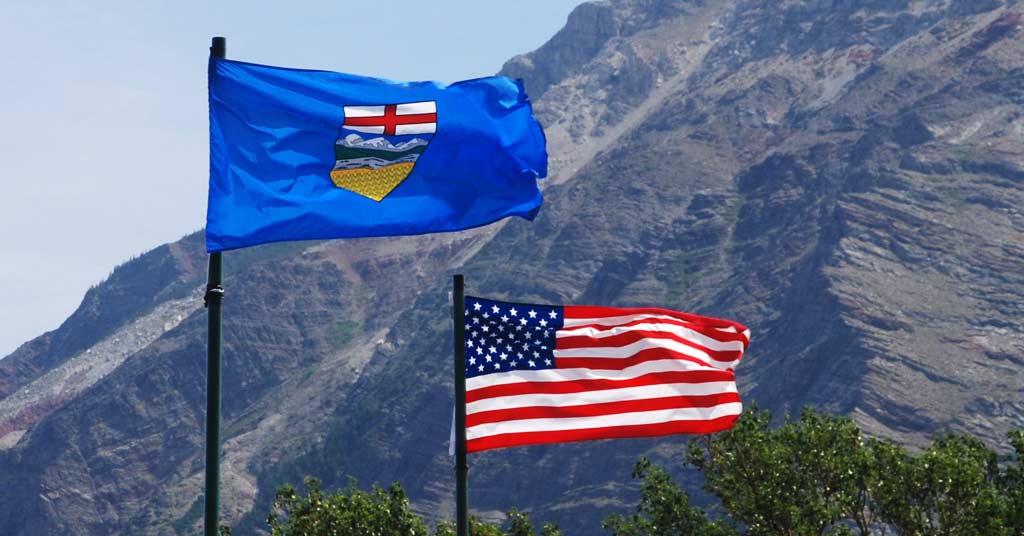
Will Alberta join the US?
Will Alberta join the US?
Order Book
Will Alberta join the US?
Resolution Criteria
This market will resolve to "Yes" if it is officially announced that Alberta will come under US sovereignty, or if Alberta officially comes under US sovereignty, by December 31, 2026, 11:59 PM ET. Otherwise this market will resolve to "No". Sovereignty is defined as the transfer of the majority of the territory of Alberta as of February 6, 2026, currently a Canadian province, to being under the formal governance or jurisdiction of the United States, either as a state, territory, or other classification within the US system. An official announcement made by the United States and Canada that Alberta will come under US sovereignty, within this market's timeframe, will qualify, even if the actual transfer of sovereignty is yet to occur. Only announcements of official agreements or actions (e.g. a ratified treaty, signed legislation, etc.) will count - mere suggestions, negotiations, or posts on Social Media will not. The resolution source for this market will be official information from the governments of the US, Canada, and Alberta, however a consensus of credible reporting confirming that Alberta has come under U.S. sovereignty will also qualify.
Prediction markets place the probability of Alberta joining the United States by the end of 2026 at a very low level, with the outcome heavily concentrated on 'No'. Resolution requires an official announcement or completed transfer of Alberta's sovereignty to the US — as a state, territory, or other classification — by 31 December 2026, confirmed by government sources or a consensus of credible reporting.
Market structure
This is a binary yes/no market with a single tracked outcome. Volume is heavily concentrated against resolution, reflecting the absence of any formal process. Resolution requires either an official ratified agreement or a completed sovereignty transfer affecting the majority of Alberta's territory by 31 December 2026. The resolution source is official communications from the governments of the United States, Canada, and Alberta, with credible reporting consensus as a fallback.
Background
Discussion of Alberta potentially joining the United States has circulated periodically in Canadian political discourse, most notably among segments of Alberta's independence movement who express frustration with federal policy on energy and equalization payments. The conversation gained renewed media attention in early 2025 following remarks by US political figures about expanding American territory northward. Alberta Premier Danielle Smith has addressed the topic publicly, affirming provincial jurisdiction while distancing the government from formal annexation discussions. No official process — constitutional, legislative, or diplomatic — has been initiated by any of the three relevant governments. Canadian constitutional law makes provincial secession or transfer of sovereignty an extraordinarily complex legal undertaking, requiring federal and potentially provincial legislative consent.
Key factors
Several structural factors bear on whether this market could resolve 'Yes' before the deadline. First, Canadian constitutional law presents a formidable barrier: transferring a province to foreign sovereignty would require amendments under the Constitution Act, 1982, likely necessitating consent from Parliament and provincial legislatures. Second, no formal negotiations between the governments of Canada, the United States, and Alberta have been reported as having commenced. Third, the political incentives for the Canadian federal government to agree to any such transfer are considered negligible by most analysts, and public polling in Alberta has consistently shown majority support for remaining within Canada. Fourth, even if political will were to emerge suddenly, the ratification timelines for treaties and constitutional amendments would make completion before 31 December 2026 logistically challenging. Fifth, US congressional approval would be required to admit a new state or territory, adding another legislative dependency.
FAQ
How is the 'Will Alberta join the US?' market resolved?
The market resolves 'Yes' if Alberta officially comes under US sovereignty — as a state, territory, or other classification — or if an official agreement to that effect is announced, by 31 December 2026. Mere social media posts, suggestions, or unratified negotiations do not qualify. Official government sources or a credible reporting consensus serve as the resolution source.
When does the Alberta joining the US market resolve?
The market resolves on 31 December 2026 at 11:59 PM ET. If no official announcement or completed sovereignty transfer has occurred by that deadline, the market resolves 'No'. There is no extended fallback window beyond that date.
What happens if Alberta holds an independence referendum but no transfer occurs by the deadline?
A referendum result alone would not trigger resolution. The market requires a formal, ratified agreement or completed transfer of sovereignty to the United States. An Alberta independence vote, without a subsequent official US–Canada sovereignty agreement enacted before the deadline, would result in a 'No' resolution.
What does the Alberta joining the US market currently show?
Trading volume is overwhelmingly concentrated on a 'No' outcome. The implied probability of resolution as 'Yes' sits at a very low level, reflecting the absence of any formal diplomatic or legislative process and the significant constitutional barriers to such a transfer occurring within the market's timeframe.
Paridesk is not a regulated financial advisor. The information above is for informational purposes only and does not constitute financial, investment, or trading advice. Prediction markets carry risk of total loss. Past patterns do not guarantee future outcomes.
Related Markets







Will Alberta join the US?
2%