Next Prime Minister of Sweden
Magdalena Andersson





Order Book
Magdalena Andersson
Resolution Criteria
Parliamentary elections are scheduled to be held in Sweden on September 13, 2026. This market will resolve to the next individual who is officially appointed and assumes office as Prime Minister of Sweden following the next parliamentary election. To count for resolution, the individual must officially assume office. Any interim or caretaker Prime Minister will not count toward the resolution of this market. If no such Prime Minister assumes office by June 30, 2027, 11:59 PM ET, this market will resolve to “Other”. The primary resolution source for this market will be official information from the Government of Sweden; however, a consensus of credible reporting may also be used.
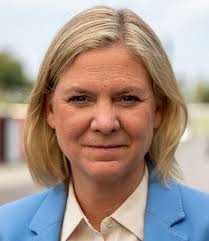
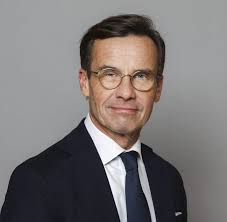
Magdalena Andersson is the heaviest-backed contender to become the next Prime Minister of Sweden following the parliamentary election scheduled for 13 September 2026, with trading volume heavily concentrated on her as the single dominant outcome. Ulf Kristersson is the next most backed contender, representing the incumbent centre-right bloc. The market resolves once an individual is officially appointed and assumes office, with a fallback deadline of 30 June 2027.
Market structure
The market spans 36 named outcomes plus an 'Other' fallback. Volume is heavily concentrated on a single outcome — Magdalena Andersson — with a secondary cluster around Ulf Kristersson and a long tail of minor contenders each attracting negligible trading interest. Resolution requires official appointment and assumption of office as Prime Minister; interim or caretaker holders do not qualify. The primary resolution source is the Government of Sweden, supplemented by credible press consensus.
Background
Sweden holds general elections every four years, with the next scheduled for 13 September 2026. The current government is led by Prime Minister Ulf Kristersson of the Moderate Party, heading a centre-right administration that took office after the 2022 election. Magdalena Andersson, leader of the Social Democrats, served as Prime Minister from 2021 to 2022 and remains the opposition's leading figure. Swedish politics has been characterised in recent cycles by narrow parliamentary margins, with the Sweden Democrats playing a pivotal role in determining which bloc can command a majority. The outcome of the 2026 election will depend heavily on coalition arithmetic across both the centre-left and centre-right blocs.
Key factors
The central factor is which bloc — centre-left or centre-right — can secure a working parliamentary majority following the September 2026 election. Swedish coalition formation often requires negotiation across several parties, meaning the largest party leader does not automatically become Prime Minister if their bloc falls short. The role of the Sweden Democrats in supporting a centre-right government, and the potential alignment of smaller parties such as the Centre Party or Liberals, will shape the outcome. Polling trajectories in the months before the election, any leadership changes within major parties, and broader economic conditions — including housing costs, energy policy, and law and order debates — could influence vote shares. If no majority is achievable, a period of negotiation could push formal appointment beyond election day, though the June 2027 fallback deadline provides significant runway.
FAQ
How is the Next Prime Minister of Sweden market resolved?
The market resolves to the individual who is officially appointed and assumes office as Prime Minister following the 2026 Swedish parliamentary election. Interim or caretaker Prime Ministers are excluded. The primary source is official information from the Government of Sweden, with credible press consensus as a supplementary source.
When does the Next Prime Minister of Sweden market resolve?
The Swedish parliamentary election is scheduled for 13 September 2026. The market resolves once a Prime Minister officially assumes office after that election. If no qualifying individual has taken office by 30 June 2027 at 11:59 PM ET, the market resolves to 'Other'.
What happens if Sweden's government formation is delayed after the 2026 election?
Swedish coalition negotiations can extend several weeks beyond election day. The market accommodates this with a fallback deadline of 30 June 2027. If no individual has officially assumed office as Prime Minister by that deadline, the market resolves to 'Other' rather than to any named contender.
What does the Next Prime Minister of Sweden market currently show?
Trading is heavily concentrated on Magdalena Andersson, leader of the Social Democrats, as the single dominant outcome. Ulf Kristersson, the current Prime Minister and Moderate Party leader, is the next heaviest-backed contender. All other named individuals attract minimal trading interest.
Paridesk is not a regulated financial advisor. The information above is for informational purposes only and does not constitute financial, investment, or trading advice. Prediction markets carry risk of total loss. Past patterns do not guarantee future outcomes.
Related Markets

Magdalena Andersson
73%