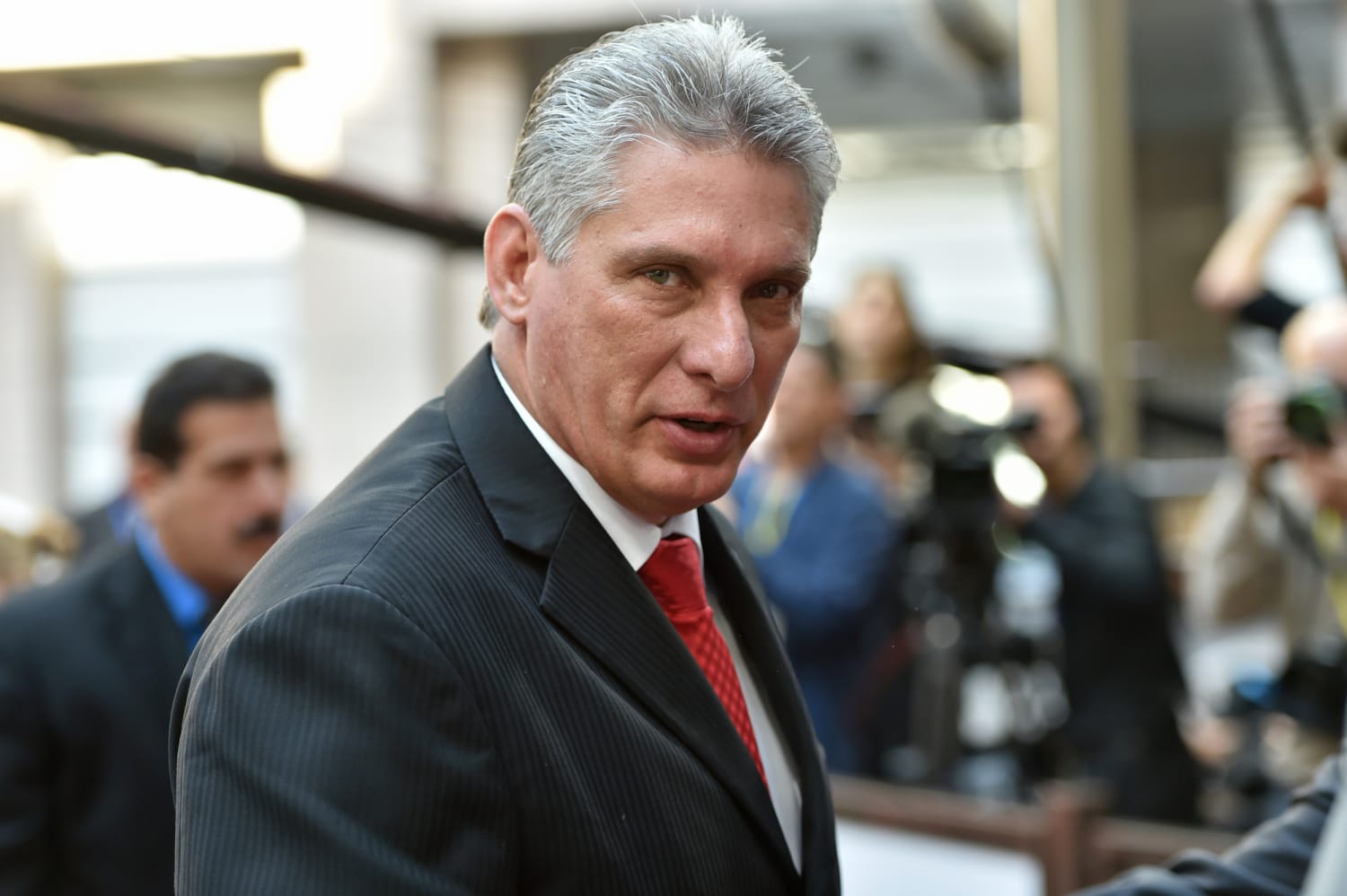
US federally charges Cuba leader Miguel Diaz-Canel by...?
December 31
Order Book
December 31
Resolution Criteria
This market will resolve to “Yes” if the United States federal government formally charges or announces a criminal indictment of Cuban President Miguel Diaz-Canel between market creation and June 30, 2026, 11:59 PM ET. Otherwise, this market will resolve to “No”. The primary resolution source for this market will be official information from US governmental sources, however a wide consensus of credible reporting will also be used.
The prediction market on whether the United States will federally charge Cuban President Miguel Díaz-Canel resolves 'Yes' only if the US government formally issues a criminal indictment against him by 30 June 2026. Trading is heavily concentrated on the 'No' outcome, reflecting the significant diplomatic and legal hurdles involved. Resolution is based on official US government announcements or a wide consensus of credible reporting.
Market structure
This is a binary yes/no market with a single resolution question. Volume is heavily concentrated on the 'No' outcome, with a small but non-trivial portion of trading backing a 'Yes' resolution. The market resolves 'Yes' only upon a formal US federal criminal charge or indictment of Díaz-Canel announced before 30 June 2026. The primary resolution source is official US governmental records, supplemented by broad credible media consensus.
Background
Miguel Díaz-Canel has served as President of Cuba since 2018 and as First Secretary of the Communist Party since 2021, making him the country's most senior political figure. Relations between the United States and Cuba have remained deeply adversarial, with the US maintaining a comprehensive embargo and designating Cuba as a state sponsor of terrorism. Washington has previously issued federal indictments against foreign heads of state — most notably Venezuela's Nicolás Maduro, who was charged in 2020 with narco-terrorism — establishing a precedent that has fuelled speculation about similar action against Cuban leadership. Accusations linking Cuban officials to drug trafficking, human rights abuses, and support for authoritarian governments in the region have circulated in US policy and legal discussions, raising the profile of this market.
Key factors
Several structural factors bear on this market's resolution. The US Department of Justice's willingness to indict sitting foreign leaders depends on both evidentiary thresholds and executive-branch political calculations; the Maduro indictment demonstrated that such action is legally possible but remains rare. US-Cuba policy under any administration involves competing diplomatic and geopolitical considerations, meaning prosecutorial decisions are not made in isolation from foreign policy objectives. The existence or absence of sealed indictments is unknown until unsealed, so the market carries inherent information asymmetry. Cuba's status as a designated state sponsor of terrorism could lower political barriers to such a charge, but the absence of extradition mechanisms means any indictment would be primarily symbolic in immediate legal terms. Congressional pressure, DEA or FBI investigative timelines, and broader Western Hemisphere policy shifts — particularly regarding Venezuela — could all influence whether and when such a charge is filed before the June 2026 deadline.
FAQ
How is the 'US federally charges Miguel Díaz-Canel' market resolved?
The market resolves 'Yes' if the US federal government formally issues a criminal charge or announces a criminal indictment against Cuban President Miguel Díaz-Canel. Resolution is confirmed via official US government sources or a wide consensus of credible reporting. A 'No' resolution requires no such action by the deadline.
When does the Miguel Díaz-Canel indictment market resolve?
The market resolves on or before 30 June 2026 at 11:59 PM ET. If no formal US federal charge or indictment against Díaz-Canel is announced by that deadline, the market resolves 'No'. A qualifying announcement at any point before the deadline triggers 'Yes' resolution.
What happens if a sealed indictment exists but is not publicly announced before the deadline?
If a sealed indictment has not been officially announced or publicly confirmed through credible reporting by 30 June 2026, it would not satisfy resolution criteria. The market requires a formal charge or announced indictment; unconfirmed or sealed-only proceedings would likely result in a 'No' resolution.
What does the market currently show for the Díaz-Canel indictment question?
Trading is heavily concentrated on the 'No' outcome, indicating that the bulk of market participants do not anticipate a formal US federal charge against the Cuban president before the June 2026 deadline. A smaller share of volume backs a 'Yes' resolution, reflecting the non-zero possibility given prior US indictments of foreign leaders.
Paridesk is not a regulated financial advisor. The information above is for informational purposes only and does not constitute financial, investment, or trading advice. Prediction markets carry risk of total loss. Past patterns do not guarantee future outcomes.
Related Markets





December 31
54%