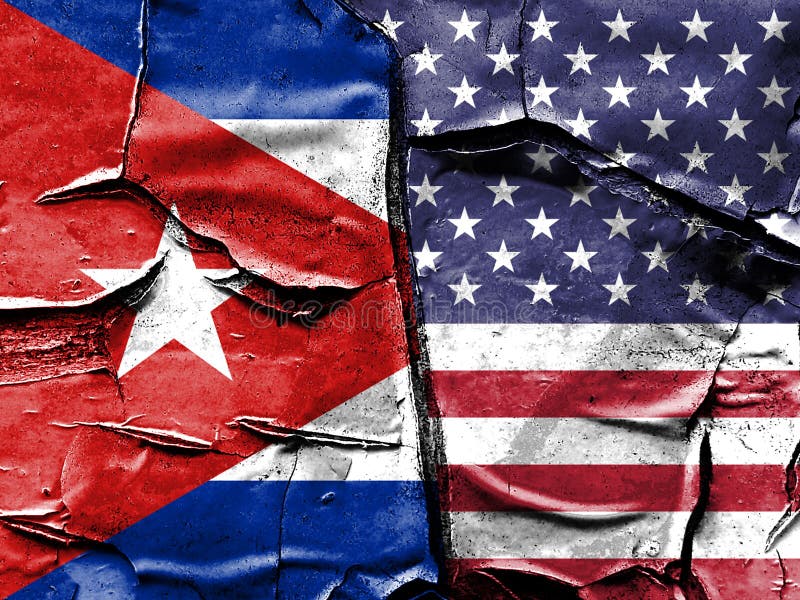
Will the U.S. invade Cuba in 2026?
Will the U.S. invade Cuba in 2026?
Order Book
Will the U.S. invade Cuba in 2026?
Resolution Criteria
This market will resolve to "Yes" if the United States commences a military offensive intended to establish control over any portion of Cuban land territory by December 31, 2026, 11:59 PM ET. Otherwise, this market will resolve to "No". For the purposes of this market, land de facto controlled by Cuba or the United States as market creation, will be considered the sovereign territory of that country. The resolution source for this market will be a consensus of credible sources.
Prediction markets assign a small but notable minority share of volume to a 'Yes' resolution on whether the United States will invade Cuba in 2026, making it a heavily skewed market with 'No' as the dominant outcome. The market resolves if the United States commences a military offensive intended to establish control over any portion of Cuban land territory before 31 December 2026, verified by a consensus of credible sources. The single tracked outcome is the 'Yes' scenario; the implied default remains 'No'.
Market structure
This is a binary market with one explicitly tracked outcome — a U.S. military invasion of Cuba resulting in territorial control — against an implicit 'No' default. Volume is heavily concentrated on 'No', with 'Yes' representing a clear minority position. Resolution requires a consensus of credible sources confirming a military offensive has commenced with intent to establish land control. The deadline is 31 December 2026, 11:59 PM ET.
Background
U.S.-Cuba relations have been defined by tension since the 1959 Cuban Revolution, with the failed Bay of Pigs invasion in 1961 and the Cuban Missile Crisis of 1962 marking the most acute periods of confrontation. The United States has maintained a trade embargo against Cuba for over six decades. Relations saw a partial thaw during the Obama administration but deteriorated again under subsequent administrations, with Cuba remaining on the U.S. State Department's list of state sponsors of terrorism. Periodic rhetoric in American political discourse about Cuba's government, combined with Cuba's geographic proximity to Florida and its relationship with adversaries of the United States, sustains occasional speculation about military contingencies. No credible reports of active invasion planning have entered the public record.
Key factors
Several structural factors bear on this market's resolution. First, any military offensive would require either congressional authorisation or an executive determination under war powers, both of which would generate substantial public and diplomatic signals well in advance. Second, the geopolitical response calculus is significant: a U.S. military action against Cuba would carry implications for relationships with Latin American governments, the United Nations, and countries with existing ties to Havana, including Russia and China. Third, the specific resolution threshold — a military offensive intended to establish control over land territory — is high, excluding blockades, airstrikes, or covert operations unless they form part of a broader territorial campaign. Fourth, domestic U.S. political conditions in 2026, including midterm election dynamics, shape the risk appetite of any administration. Fifth, developments within Cuba itself, such as political instability or humanitarian crises, could alter the calculus, though no such trigger is currently documented.
FAQ
How is the 'Will the U.S. invade Cuba in 2026?' market resolved?
The market resolves 'Yes' if the United States commences a military offensive intended to establish control over any portion of Cuban land territory before 31 December 2026, confirmed by a consensus of credible sources. Actions that do not involve territorial control — such as naval blockades or airstrikes alone — would not satisfy the resolution criteria.
When does the U.S. invasion of Cuba market resolve?
The market resolves on or before 31 December 2026 at 11:59 PM ET. If no qualifying military offensive has commenced by that deadline, the market resolves 'No' by default. Resolution can occur earlier if a confirmed invasion begins before that date.
What happens if the U.S. conducts military action against Cuba but does not seek territorial control?
Actions such as naval blockades, airstrikes, cyber operations, or limited strikes that are not part of an offensive intended to establish control over Cuban land territory would not trigger a 'Yes' resolution. The criteria specifically require both a military offensive and intent to control land territory.
What does the U.S. invasion of Cuba prediction market currently show?
The market is heavily skewed toward 'No', with 'Yes' representing a clear minority position. No single named actor or event is driving the 'Yes' volume; the minority share reflects a generalised low-probability scenario rather than a concentrated bet on specific intelligence or announced policy.
Paridesk is not a regulated financial advisor. The information above is for informational purposes only and does not constitute financial, investment, or trading advice. Prediction markets carry risk of total loss. Past patterns do not guarantee future outcomes.
Related Markets






Will the U.S. invade Cuba in 2026?
6%