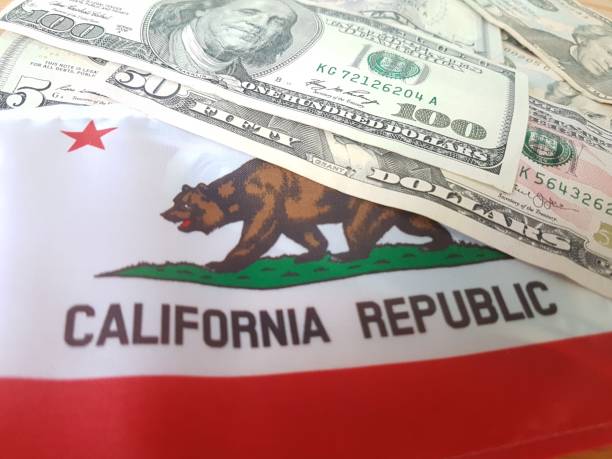
Billionaire one-time wealth tax passes in California election 2026?
Billionaire one-time wealth tax passes in California election 2026?
Order Book
Billionaire one-time wealth tax passes in California election 2026?
Resolution Criteria
A one-time wealth tax on billionaires has been proposed to potentially appear on California's ballot for the November 3, 2026 general election. You can read more about that here: https://6abc.com/post/california-union-proposes-taxing-billionaires-offset-medicaid-cuts-low-income-people/18066430/ This market will resolve to "Yes" if any proposition containing a one-time tax targeting individuals, households, or family units with wealth, assets, or net worth of at least $1 billion (USD or equivalent) passes in the named election. Otherwise, this market will resolve to "No". If no qualifying ballot initiative is certified to appear on the official statewide California ballot as a proposition to be voted on in the stated election by June 25, 2026, 11:59 PM ET (the official cutoff date for new initiatives to be approved), or if all qualifying propositions/initiatives are removed from the ballot or amended before the election such that the main threshold drops below $1 billion, this market will resolve "No". The primary resolution source for this market will be official information from the Government of the State of California, however a consensus of credible reporting may also be used.
Prediction market trading on whether a billionaire one-time wealth tax will pass in California's November 2026 election shows the outcome as a minority position, with volume concentrated on a 'No' resolution. The market covers any proposition targeting individuals or households with net worth of at least one billion dollars appearing on the official statewide ballot and receiving majority support. Resolution is drawn from official California government sources, with a hard deadline of 3 November 2026.
Market structure
This is a binary yes/no market with a single outcome tracked. Trading is concentrated on the 'No' side, making passage the minority position. Resolution requires both ballot certification by 25 June 2026 and a majority vote on 3 November 2026. If no qualifying initiative is certified by the June cutoff, or if all qualifying propositions are removed or amended below the one-billion-dollar threshold, the market resolves 'No' immediately. The primary source of truth is official California government information.
Background
The proposal emerged from California labour groups seeking to offset potential federal Medicaid cuts affecting low-income residents. The concept of a one-time levy on billionaires has circulated in several US states as a response to both federal fiscal policy shifts and state budget pressures. California, home to a significant concentration of the world's wealthiest individuals, has repeatedly been the site of high-profile wealth and income tax debates. Previous efforts to pass broad wealth taxes in US states have faced significant legal challenges under existing federal and state constitutional frameworks, as well as sustained opposition from business and finance interests. The 2026 cycle places this debate within a broader national conversation about tax policy and social spending.
Key factors
Several structural factors shape how this market could resolve. First, the initiative must be certified for the ballot by 25 June 2026 — failure at that stage triggers an automatic 'No' resolution regardless of public sentiment. Second, even if certified, the proposition must survive potential legal challenges or sponsor withdrawals before election day. Third, California ballot initiative campaigns are heavily influenced by funding asymmetries; well-resourced opposition campaigns have historically been effective in defeating tax measures. Fourth, the legal enforceability of a state-level wealth tax remains contested, which may affect voter confidence and campaign messaging. Fifth, the political environment in late 2026 — including federal fiscal decisions on Medicaid and the broader economic climate — could shift public appetite for or against the measure. Finally, the exact threshold and structure of any certified proposition must remain at or above the one-billion-dollar net worth level to qualify under the resolution criteria.
FAQ
How is the California billionaire wealth tax ballot market resolved?
The market resolves 'Yes' only if a proposition containing a one-time tax targeting individuals or households with net worth of at least one billion dollars both appears on the official California statewide ballot and receives majority voter approval on 3 November 2026. Official California government information is the primary source of truth.
When does the California billionaire wealth tax market resolve?
The market resolves on or by 3 November 2026, the date of California's general election. However, it can resolve earlier — specifically 'No' — if no qualifying initiative is certified for the ballot by the 25 June 2026 cutoff deadline.
What happens if the wealth tax proposal is removed from the ballot or amended before the election?
If all qualifying propositions are removed from the ballot before election day, or if any remaining propositions are amended so that the wealth threshold drops below one billion dollars, the market resolves 'No'. The one-billion-dollar net worth floor is a strict requirement for a 'Yes' resolution.
What does the market currently show for the California billionaire wealth tax?
Trading is concentrated on the 'No' side, with passage representing the minority position in the market. Volume reflects scepticism about both the likelihood of ballot certification and the prospects of voter approval, though the 'Yes' position is not negligible.
Paridesk is not a regulated financial advisor. The information above is for informational purposes only and does not constitute financial, investment, or trading advice. Prediction markets carry risk of total loss. Past patterns do not guarantee future outcomes.
Related Markets







Billionaire one-time wealth tax passes in California election 2026?
25%