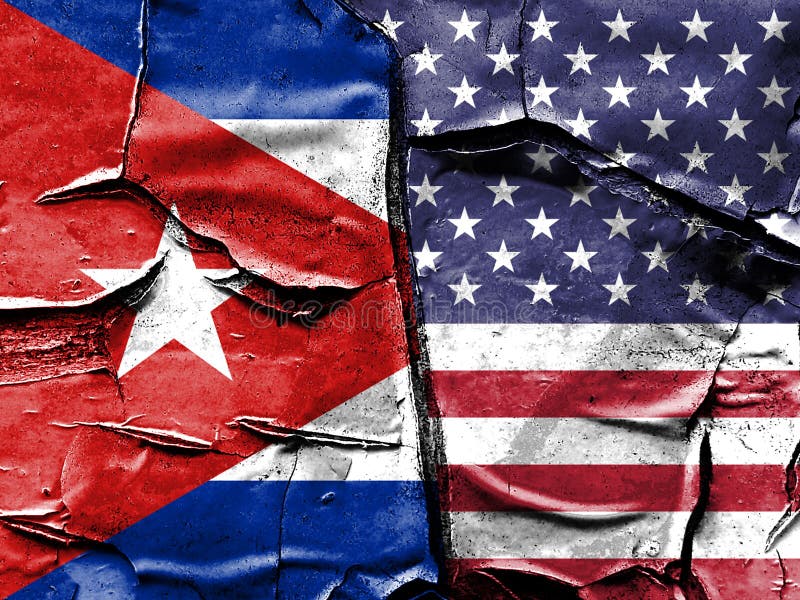
US military action against Cuba by...?
December 31
Order Book
December 31
Resolution Criteria
This market will resolve to "Yes" if a US-initiated drone, missile, or air strike on the soil of Cuba is announced or credibly reported to have occurred by the listed date ET. Otherwise, this market will resolve to "No". For the purposes of this market, a qualifying "strike" is defined as the use of aerial bombs, drones, or missiles (including FPV and ATGM strikes as well as cruise or ballistic missiles) launched by any United States operatives, including military forces, intelligence agencies, or other U.S. government operatives, that physically impact ground territory within the listed country. A strike on any area within the terrestrial territory (including rivers, lakes, ports, but excluding territorial sea) of the listed country counts. Missiles or drones that are intercepted and surface-to-air missile strikes will not be sufficient for a "Yes" resolution, regardless of whether they land territory or cause damage. Actions such as artillery fire, small arms fire, ground incursions, naval shelling, or cyberattacks will not qualify. Any strike occurring during this market’s timeframe that is claimed by either Donald Trump or the U.S. government will qualify. The primary resolution source will be a consensus of credible reporting. This market will remain open until the end of the second day after the resolution time. If the date/time of a qualifying strike cannot be confirmed by a consensus of credible reporting by that time, it will resolve to "No" regardless of whether a strike was later confirmed to have taken place.
Prediction markets show the heaviest concentration of volume on a 'No' resolution — meaning no US drone, missile, or air strike on Cuban soil occurring before 31 December 2026. The market covers a specific and narrow definition of military action, excluding ground incursions, naval fire, and cyberattacks. Resolution requires a consensus of credible reporting confirming a qualifying strike within the timeframe.
Market structure
The market offers multiple outcome windows tied to timing, with volume heavily concentrated on the outcome implying no qualifying strike occurs before the 31 December 2026 deadline. Resolution requires confirmed credible reporting of a US-initiated aerial strike — drone, missile, or bomb — physically impacting Cuban terrestrial territory. Intercepted munitions do not qualify. The market closes two days after the resolution date, with a hard 'No' default if confirmation is absent.
Background
US–Cuba relations have been characterised by decades of hostility, diplomatic isolation, and covert operations, most acutely during the Cold War era. Since the 1962 missile crisis, direct US military action against Cuban soil has not occurred, though the two countries have had no normal diplomatic relations for extended periods. Cuba remains under US sanctions and has been listed on the US State Sponsors of Terrorism designation. Renewed geopolitical tensions in the Western Hemisphere and shifts in US foreign policy posture under successive administrations have kept Cuba within the orbit of Washington's strategic calculus, making speculative markets on bilateral escalation a recurring subject of public interest.
Key factors
Several structural factors bear on whether this market resolves 'Yes' before the deadline. The current US administration's stated foreign policy priorities, particularly regarding the Western Hemisphere and perceived adversaries, could shift the risk environment materially. Cuba's relationships with Russia, China, and other US-designated adversaries are frequently cited in US national security discourse as potential flashpoints. Any deterioration in regional stability — such as humanitarian crises, military incidents at sea, or intelligence disclosures about foreign military presence on the island — could alter the political calculus. Domestically, Congressional authorisation dynamics and the War Powers Resolution framework shape the president's operational latitude. The strict resolution criteria — requiring aerial impact on terrestrial territory and excluding interceptions — means that ambiguous or partial incidents would likely resolve to 'No'. The two-day confirmation window further tightens the evidentiary threshold required for a 'Yes' resolution.
FAQ
How is the US military action against Cuba market resolved?
The market resolves 'Yes' if a US-initiated drone, missile, or air strike physically impacts Cuban terrestrial territory and is confirmed by a consensus of credible reporting. Intercepted munitions, naval shelling, ground incursions, and cyberattacks do not qualify. The primary source of truth is credible journalistic consensus.
When does the US military action against Cuba market resolve?
The resolution deadline is 31 December 2026. The market remains open for two days after that date to allow confirmation. If a qualifying strike cannot be confirmed by credible reporting within that window, the market resolves 'No' regardless of subsequent disclosures.
What happens if a US strike is reported but later disputed or unconfirmed?
If the date and nature of a qualifying strike cannot be confirmed by a consensus of credible reporting within two days of the resolution deadline, the market defaults to 'No'. Disputed, unverified, or later-confirmed strikes that miss the confirmation window do not qualify for 'Yes' resolution.
What does the market currently show?
Volume is heavily concentrated on the outcome suggesting no qualifying US strike on Cuba occurs before the end of 2026. The market structure implies the event is treated as a low-probability but non-negligible geopolitical scenario, with the 'No' outcome drawing the dominant share of market activity.
Paridesk is not a regulated financial advisor. The information above is for informational purposes only and does not constitute financial, investment, or trading advice. Prediction markets carry risk of total loss. Past patterns do not guarantee future outcomes.
Related Markets






December 31
9%