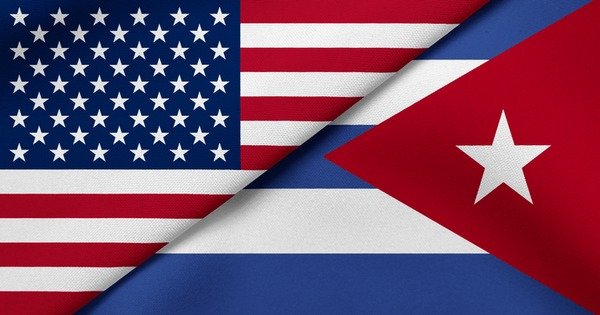
US x Cuba economic deal by...?
December 31
Order Book
December 31
Resolution Criteria
This market will resolve to "Yes" if an official agreement over trade, tariffs, sanctions, or the US embargo on Cuba, defined as a publicly announced mutual agreement, is reached between the United States and Cuba by the specified date, 11:59 PM ET. Otherwise, this market will resolve to “No”. A qualifying agreement may include, but is not limited to, US sanctions relief for Cuba or other easing of U.S. restrictions on Cuban imports, exports, shipping, payments, energy trade, or other trade-related activity. If such an agreement is officially reached before the resolution date, this market will resolve to "Yes", regardless of if/when the agreement goes into effect. Agreements that include the United States and Cuba as parties, even if they also involve other countries, will qualify for resolution. Only deals which are officially announced by both parties will qualify . Informal announcements which do not constitute a finalized agreement will not count. The primary resolution source for this market will be an official announcement by the United States and Cuba, however an overwhelming consensus of credible reporting confirming an agreement has been reached will also qualify.
Prediction market trading on whether the United States and Cuba will reach an official economic agreement by 30 June 2026 shows the 'Yes' outcome as a minority position, with volume concentrated against a deal being finalised within the timeframe. Resolution requires an officially announced mutual agreement covering trade, tariffs, sanctions, or embargo measures. The primary resolution source is an official announcement from both governments, with credible press consensus as a fallback.
Market structure
A binary market with two outcomes — 'Yes' (deal reached by 30 June 2026) and 'No'. Volume is heavily concentrated on the 'No' outcome. Resolution requires an official, publicly announced mutual agreement between the United States and Cuba on trade-related matters. Informal statements or unilateral announcements do not qualify. The deadline is 30 June 2026 at 11:59 PM ET, with no extension mechanism specified.
Background
US–Cuba economic relations have been shaped by a comprehensive trade embargo in place since the early 1960s, reinforced through successive pieces of legislation including the Helms-Burton Act of 1996. A brief diplomatic thaw under the Obama administration from 2014 to 2016 produced limited regulatory easing and the restoration of diplomatic relations, but fell short of lifting the statutory embargo. The Trump administration reversed many of those measures during its first term. Under subsequent administrations, the embargo has remained the central legal and political obstacle to any formal trade agreement. Cuba's economy has deteriorated significantly in recent years, with shortages of fuel, food, and medicine prompting large-scale emigration. The question of whether any US administration will pursue meaningful economic normalisation with Havana remains politically contentious domestically, particularly in Florida.
Key factors
Several structural factors bear on whether an agreement could materialise before the deadline. Legislatively, the core US embargo is codified in statute and cannot be lifted by executive action alone, meaning any comprehensive deal would require Congressional approval — a significant procedural hurdle. Executive-level sanctions relief, however, remains within presidential authority and could constitute a qualifying agreement under the resolution criteria. The diplomatic posture of the current US administration toward Cuba, including any back-channel negotiations or third-party mediation involving countries such as Mexico or Canada, would directly affect the probability of a deal. On Cuba's side, the government's willingness to offer political or economic concessions — including on human rights, private enterprise, or prisoner releases — has historically been a precondition demanded by US negotiators. Regional dynamics, including any broader Latin America policy shifts, and the electoral calendar in the United States could also influence the timing and appetite for engagement.
FAQ
How is the US–Cuba economic deal market resolved?
The market resolves 'Yes' if an official, publicly announced mutual agreement on trade, tariffs, sanctions, or the US embargo is reached by both governments before the deadline. Informal statements, unilateral announcements, or agreements not confirmed by both parties do not qualify. An overwhelming consensus of credible reporting can substitute for a direct official announcement.
When does the US–Cuba economic deal market resolve?
The market resolves at 11:59 PM ET on 30 June 2026. If a qualifying agreement is officially announced before that deadline, the market resolves 'Yes' immediately, regardless of when the agreement itself enters into force.
What happens if only partial sanctions relief is announced — does that count?
Partial measures may qualify if they constitute an officially announced mutual agreement between the United States and Cuba. The resolution criteria explicitly include sanctions relief and easing of restrictions on imports, exports, shipping, payments, or energy trade, so a limited but formally agreed deal could trigger a 'Yes' resolution.
What does the US–Cuba deal market currently show?
Volume is heavily concentrated on the 'No' outcome, indicating that market participants broadly do not anticipate an officially announced US–Cuba economic agreement being reached before the 30 June 2026 deadline. The 'Yes' outcome remains a minority position in current trading.
Paridesk is not a regulated financial advisor. The information above is for informational purposes only and does not constitute financial, investment, or trading advice. Prediction markets carry risk of total loss. Past patterns do not guarantee future outcomes.
Related Markets





December 31
21%